posted in
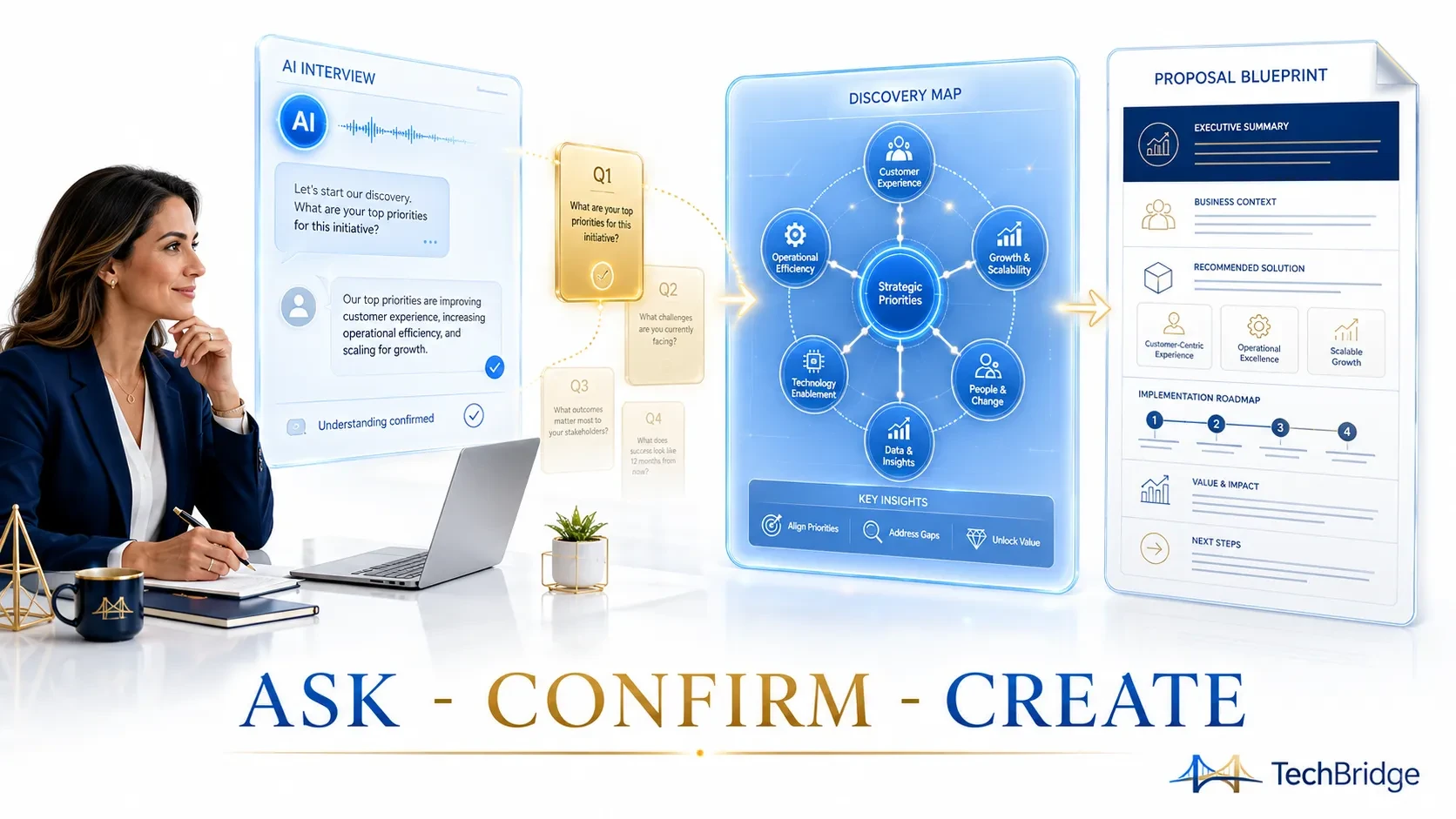
The Reverse Interview: Make AI Ask Before It Answers
Turn a vague request into a structured discovery conversation before generating the deliverable.
Tip
Use a Reverse Interview. Instead of asking AI to immediately create a proposal, strategy, coaching plan, campaign, or analysis, instruct it to interview you first. Require one question at a time, explain why each question matters, and stop when it has enough information to produce the requested result. End the discovery phase with a summary of what it heard, unresolved assumptions, and your approval to proceed.
Why It Matters
Most disappointing AI output begins with an underspecified request. Business leaders know the situation but often omit the context a model needs: decision criteria, audience maturity, constraints, existing assets, risk tolerance, success measures, and what has already failed. A Reverse Interview converts tacit knowledge into explicit requirements. It also mirrors the strongest consulting behavior: diagnose before prescribing.
Business Impact
The time investment occurs before drafting, but the savings appear in fewer rewrites and stronger decisions.
· Planning estimate: invest 8-15 minutes in discovery to avoid 30-90 minutes of revision on complex work.
· Reduce proposal, campaign, and content rework by surfacing constraints before the first draft.
· Improve client experience because recommendations reflect the actual situation rather than generic assumptions.
· Create a reusable discovery transcript that can inform scope, delegation, and measurement.
Three Specific Use Cases
Small Business: A coach asks AI to conduct a discovery interview before creating a premium group program, including audience, transformation, delivery constraints, proof, pricing logic, and risk.
Enterprise: A transformation lead uses a Reverse Interview to define an AI use case before requesting a business case, identifying data, process volume, owners, controls, and success measures.
Personal Productivity: A professional lets AI ask about energy, deadlines, dependencies, and priorities before building a realistic weekly plan.
Example
A consultant initially asked AI to create a statement of work from a short client description. The draft looked polished but assumed training, integration, and support that had never been discussed. The consultant restarted with a Reverse Interview. Twelve focused questions uncovered the decision maker, required systems, security review, timeline, excluded work, and success metric. The resulting proposal required one minor edit instead of a full rewrite.
Ready-to-Use Prompt
Do not create the deliverable yet. First, conduct a Reverse Interview so you understand the business problem.
Requested deliverable: [PROPOSAL / STRATEGY / PLAN / CONTENT / ANALYSIS]
Desired business outcome: [OUTCOME]
Interview rules:
1. Ask one question at a time.
2. Ask no more than [10-15] questions unless I approve more.
3. Prioritize questions that could materially change the recommendation.
4. Briefly explain why each question matters.
5. Do not ask for information already provided.
6. If I do not know an answer, offer 2-3 practical options rather than inventing one.
Cover these areas when relevant:
- Audience or stakeholder
- Current process and pain point
- Desired outcome and success measure
- Constraints, budget, timeline, and resources
- Existing assets or systems
- Risk, privacy, security, or compliance
- What has already been tried
- Non-negotiables and exclusions
After the final question, provide:
A. What I heard
B. Confirmed requirements
C. Open assumptions
D. Recommended scope
E. A PROCEED / CLARIFY / ESCALATE status
Wait for my approval before creating the deliverable.
Pro Tip
Ask the AI to rank its questions by decision impact before beginning. For client work, save the approved discovery summary as the front page of the project so every later deliverable traces back to the same requirements.
Common Mistake
The common mistake is allowing the AI to ask a long questionnaire all at once. That creates rushed answers and missed follow-up questions. Ask one question at a time so each response can shape the next question. The second mistake is skipping the summary-and-approval step; without it, the AI may still proceed on a misunderstood premise.
Measure Success
· Material revisions per deliverable after the first draft.
· Requirement completeness: percentage of required fields confirmed before drafting.
· Cycle time from initial request to approved deliverable.
Avoid Using This When
Do not use a general-purpose Reverse Interview to collect highly sensitive personal, health, financial, employment, or regulated information unless the tool and workflow are approved for that data. Do not let the interview become a substitute for direct stakeholder research when affected people need to be heard.
Best Tool For
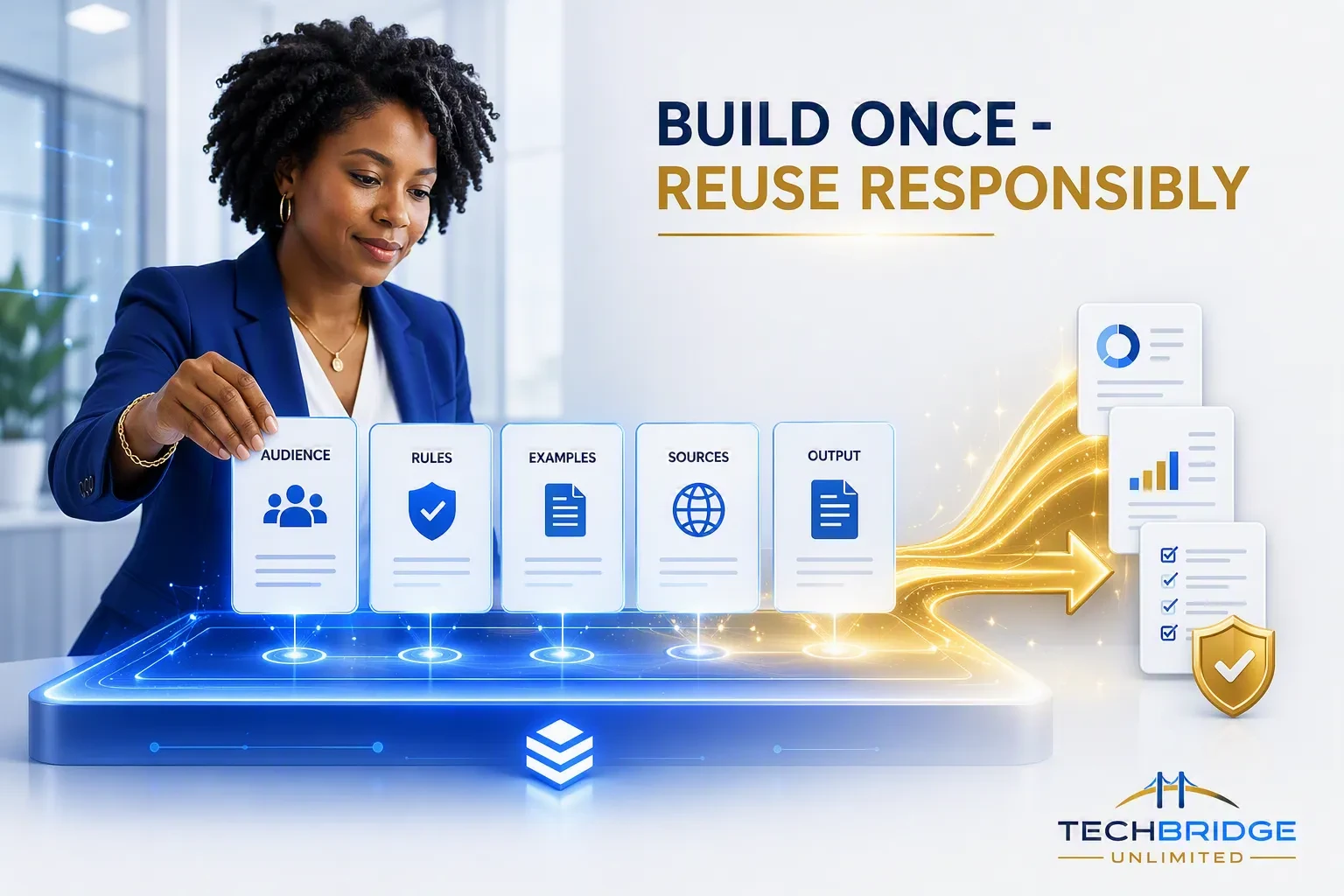
ChatGPT and Claude are especially effective for adaptive, one-question-at-a-time discovery. Microsoft Copilot is useful when the interview must be followed by work in Microsoft 365. Gemini is useful when the resulting plan will draw from Google Workspace files. A customized project, Gem, or notebook can preserve the interview method for repeated use, but the interview still needs a human to confirm what was understood.